
Afternoon Tea
It was meant to be a great treat, but I was terrified. Aunt Heppie had swept down on us and announced that she was taking me out to tea at the Trocadero.
I call her 'Aunt Heppie' – always Aunt, never Auntie – but she was really Great Aunt Hepzibah, my Grandad's older sister and pushing eighty. Dress unchanged since the Great War, thick black bombazine skirt almost to the ankle, fox fur, and a hatful of wax fruit. She clutched to herself a large maroon damask carpet bag with a wooden clasp. I was deeply embarrassed to be seen with her.
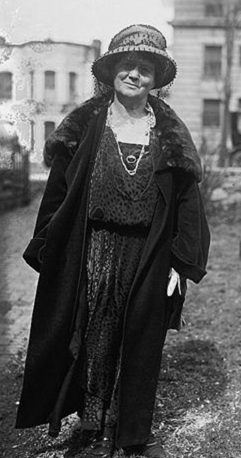
'I think the boy should see life,' she announced. 'He's my favourite nephew.' I had no idea why; I hardly ever saw her. But Aunt Heppie's word was law, so I was decked out in my new school blazer, two sizes too large so I would 'grow into it'. She straightened my school cap, and we trooped off on the 38 bus into the West End. She treated the conductor as if he was her private chauffeur, and when she paid for her fare, it was as if she was tipping him.
I was only eight years old, and I had never been to the West End before; it was like going Abroad. Aunt Heppie held onto my small hand with a surprisingly firm grip. As we stood outside the enormous redbrick Edwardian palace, she pointed out the green and silver canopy lit from below.
'Remember this,' she barked. 'This is where High Society comes. You will belong here one day.'
She dragged me into a marble hall. I was agog at all the mirrors and gilt, the white marble stairs up to the Arthurian murals along the balcony. I couldn't imagine ever belonging; What would I do? What would I say?
'The Grill Room,' my Aunt commanded a waiter in evening dress. We were ushered into a room with what seemed like hundreds of tables, each with immaculate linen and silver service. 'My usual table.'
The idea that anyone could come here regularly seemed astonishing. We were seated by a window overlooking Coventry Street, watching the traffic crawl along.
'We're having tea,' she announced. 'Darjeeling. A pot for two.' She looked at me severely. 'You are allowed tea, aren't you?' It seemed that admitting I wasn't allowed tea would be a grave lapse, so I nodded wordlessly. 'And a selection of cakes and sandwiches. Do you like sandwiches?' Again I nodded.
'Now, I have a couple of presents for you. It was your birthday last week, wasn't it? You were nine.' She seemed so certain that I didn't dare correct her. In fact I began to doubt my own age.
'Here,' she said, handing me a small box in blue tissue paper. I looked at it in wonder. I was used to presents wrapped from Woolworths. 'Well, open it, boy.' She flapped an irritated hand. I did as I was told. It was a presentation box with a Coronation Commemorative Crown – five shillings – showing the Queen on horseback. I wondered what I was meant to do with it.
'Close your mouth, Philip, you're not catching flies. What do you say?'
'Thank you, Aunt Heppie.'
'Then come and give me a kiss.'
I hurried round the table and kissed her on her heavily powdered cheek. She tasted of chalk and soap. 'Now, stand there. I've got something else for you.'
She reached to the bottom of the carpet bag and brought out a paper packet with the word Fortnum's on it. 'It's sweets,' she announced. 'Boys like sweets.'
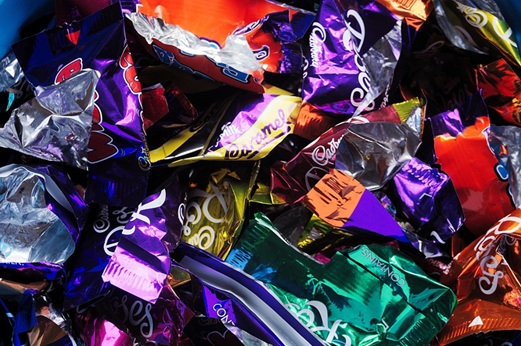
What I really liked was the fact that each was wrapped in shiny tin foil in different colours, like in a chocolate box, but without the box. I had never seen the like. I handled them reverently, like jewels, laid them out on the white table cloth, while Aunt Heppie gazed out of the window at the London Pavilion opposite. I sipped my tea and made a face. I wished it was orange squash.
Suddenly I noticed my Aunt had gone rigid. She sat upright; I could see her eyes glazed over. She turned back to the table, almost in slow motion, and as she saw the sweets laid out, she became animated again.
'Oh, what pretty flowers!' she exclaimed. She opened her bag. I watched in astonishment as she started picking the sweets up one by one and dropping them into it. All the time she was crooning to herself in a high-pitched, almost childlike, voice. She was stealing my sweets! My first thought was how embarrassing she was being, making a scene in such a grand place. I looked around for assistance. There was a waiter in his tailcoat a few tables away. I timidly beckoned to him, but he ignored me. I started to feel very scared.
I thought to myself, what could I say? My Aunt was stealing my chocolates? Even at the age of eight I could hear how absurd that sounded. Eventually, as the last shiny parcel disappeared into her bag and she sat plucking at the tablecloth, she started rocking backwards and forwards, still humming. In a panic, I grabbed the waiter, an elderly man with bowed shoulders, by the sleeve.
'Come quickly, please, she's not very well.'
He looked over and realised immediately what I was talking about. 'What's your name?' he asked. I told him. 'You come with me, Philip, and sit over here.' He found me another table in a corner and hurried away. I wondered what I would say to my parents. I had no idea what was happening.
In a few minutes the waiter was back, followed by a man with a medicine bag. Miraculously, a Knickerbocker Glory appeared in front of me, an ice cream tower, layered pink and white, with a cherry on top. I'd never been allowed one of these, they were too expensive. I looked around, and since nobody was there to forbid it, I tucked into the ice with a long spoon.
After a few minutes the doctor came over; I discovered years later that the Trocadero employed its own doctor. 'Don't worry, young man. Your Aunt has had a mild epileptic attack. I've brought her round, and she should be able to go home after a little rest. Just sit quietly with her.'
I thought about taking my ice cream back to our table but reluctantly decided against it. She might think it was another flower. So I went and sat next to her watching the ice slowly melt. Timidly I held her hand. As far as I could tell, she seemed to like it.
After ten minutes, the waiter returned. 'I've ordered a taxi, madam. No charge.'
'Thank you,' whispered Aunt Heppie, an exhausted shell of her former self. She allowed herself to be led out of the Trocadero, under the ornate canopy, and into a taxi. I followed her inside. She clutched her bag; I was still thinking of the chocolates.
'Where do you live?' the waiter asked. I gave him the address off Essex Road.
Another panic. I had no money. I'd never taken a taxi. I started to say something. 'Don't worry,' said the waiter. 'We have an account.'
I sat back, taking in the unusual smell of fresh leather. Aunt Heppie had already dozed off. As we headed up Rosebery Avenue past Sadler's Wells, I savoured the luxury of the space and the comfortable upholstery.
'Here?' asked the driver, as he pulled up opposite the Old Queen's Head. 'About a hundred yards further on,' I instructed airily. I reached towards the carpet bag.
'Don't worry, I'm not expecting a tip,' he said.
As we got out, a subdued Aunt Heppie took my arm and allowed herself to be led inside, into the parlour and onto the sofa. She was still groggy and soon dozed off again.
In the kitchen I explained what had happened, parroting what the doctor had said as if I knew all about it. 'And she's still got my chocolates,' I concluded indignantly.
My mother retrieved the bag from the parlour and was soon emptying it out on the kitchen table. The sweets didn't glitter so brightly in the dim light. She swept them up with a dustpan and brush and dropped them into the bin.
'Them's my birthday present!' The force of my outrage ripped up grammatical niceties. My mother looked deeply shocked.
'I'm not having you eating any of those,' she said. 'You might catch something.'
Peter Scott-Presland